
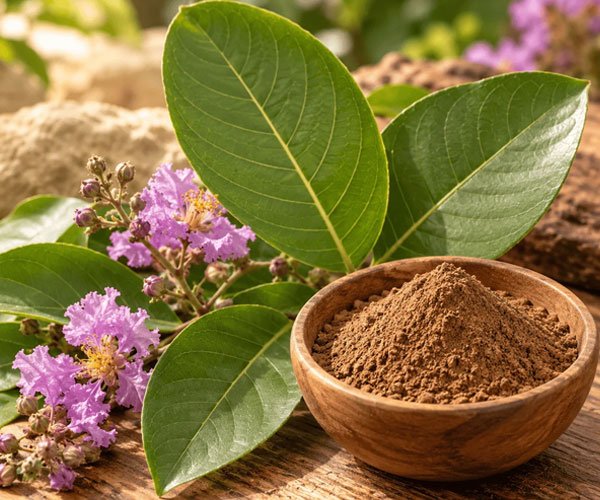
Supplement makers ask about Banaba Extract a fair bit these days. Most of them want a test report and a sample before buying, and plenty stay with one supplier once the first few orders go well.
Key Takeaways:
- Plenty of blood sugar blends list Banaba Extract as an ingredient.
- Corosolic acid gives buyers a figure to check.
- Brands usually test a sample first.
- Every lot should come with a test report.
- Steady repeat orders matter more than a cheap quote.
Supplement companies have been asking for more plant ingredients over the last few years, and Banaba Extract comes up in those conversations fairly regularly now. The extract is made from the leaves of Lagerstroemia speciosa, which grows in quite a few parts of Asia, India included. Most orders go out as brown powder.
In the Philippines, banaba leaf has long been brewed as a home tea, and researchers later got curious about its Corosolic acid. A supplier offering Banaba Extract standardised on corosolic acid gives developers a number to check on a test report. Buyers of older herbal powders had far less to go on.
Banaba on a Crowded Herbal Shelf
- Putting Banaba in a Blood Sugar Blend: Very few blood sugar products on the shelf use just one herb. Banaba usually sits somewhere in the middle of the ingredient list, with gymnema or fenugreek a line or two away. Developers seem fairly comfortable working with it, and a good few have used it before.
- Reading the Back of the Pack: Shoppers read labels more closely than they used to, and plant names seem to go over better with them. Brands notice that fairly quickly. Marketing teams like having an old leaf tea habit to mention, as long as nobody turns it into a health promise.
Looking at the Range before Adding Banaba
- Trying Banaba in an Existing Product: Changing a capsule that customers already buy makes a lot of product teams a little uneasy. Most run a small trial batch first and keep an eye on it for a few weeks. A new range gets much the same treatment, perhaps with a bit less worry.
- Picking a Corosolic Acid Grade: Buyers can get Banaba Extract in a few different corosolic acid grades, and the richer ones usually end up in capsules. Getting the grade wrong can mean reprinted labels and stock nobody wants. Someone should check what the target market allows on a label before printing.
Finding a Supplier Worth Reordering From
- Asking for Proof before Signing: A cheap first quote looks fine until a lot turns up short on corosolic acid and a filling line sits idle for days. Procurement teams usually ask to see a few things first, and the replies say a fair amount about how a plant is run.
- Proof that the leaf was identity-checked before extraction began.
- In-house corosolic acid testing on every lot.
- Microbial and heavy metal results on the certificate.
- Certificates that are still current.
- Sealed packing that keeps monsoon damp out.
- Counting on Steady Despatch: Repeat orders are where most supply trouble shows up. A brand selling a Banaba capsule needs the same grade every month, with despatch dates that actually hold. Makers of botanical extracts and phytochemicals on one site can usually ship gymnema and fenugreek alongside Banaba in a single consignment.
Bringing Banaba into the Next Formula
Most brands will find Banaba easy enough to place in a blend. Choosing who makes it takes more care. Ask for a recent certificate of analysis and a production sample before anything is agreed. Then contact a manufacturer that tests every lot in-house to discuss a long-term supply of the grade your formula needs.
